
Create a Wallet
Understand accounts and recovery before creating a wallet.
Read guide →A multi-chain wallet, blockchain network and Web3 knowledge hub from imtoken
Manage assets across multiple networks, review network selection before transfers, receive and send with clear transaction references, connect to DApps with independent signature and approval checks, and build practical knowledge about wallet security and blockchain networks.
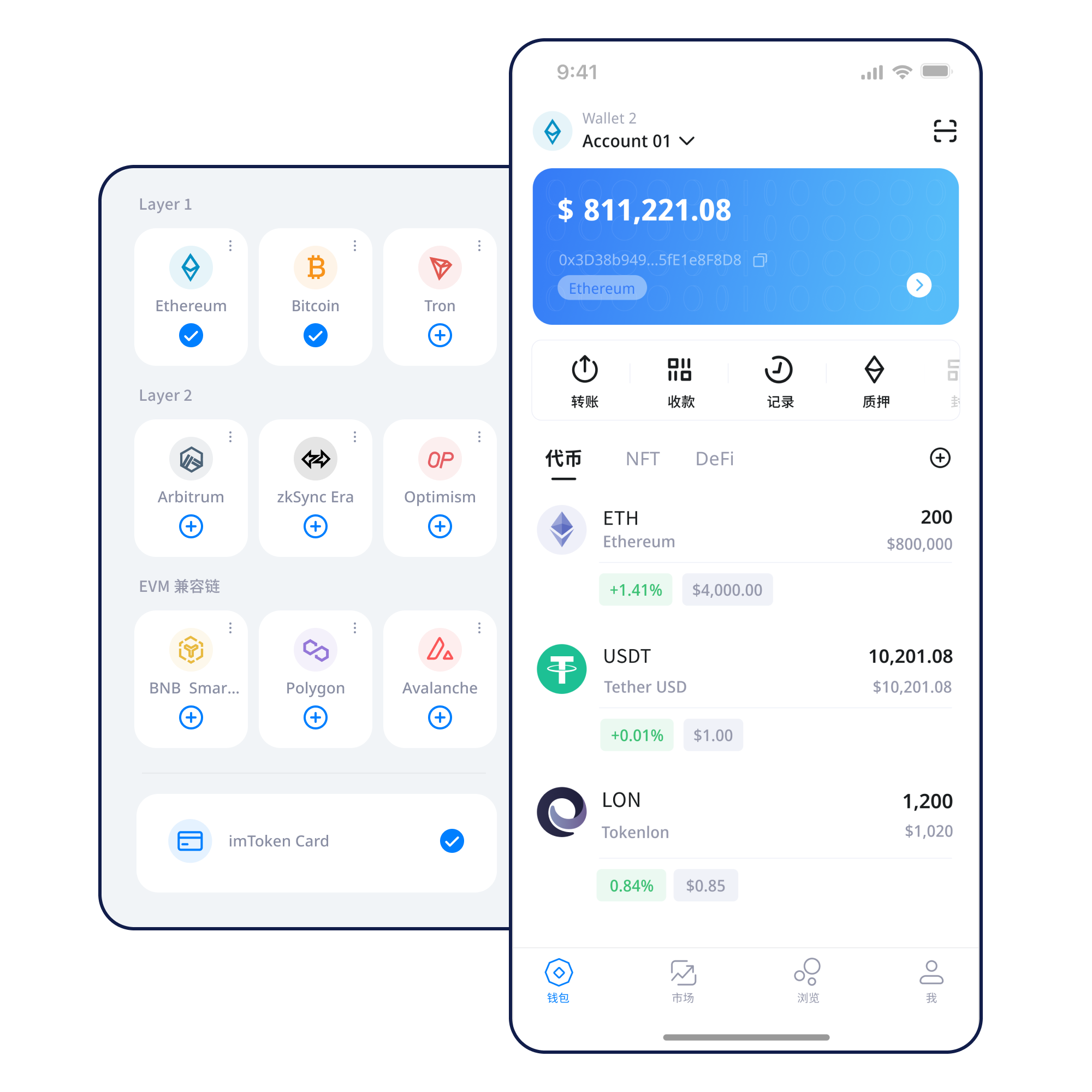
Five common wallet actions, organized as short decision paths rather than a wall of identical options.
Understand accounts and recovery before creating a wallet.
Read guide →Record the seed phrase offline and keep it away from screenshots and cloud sharing.
Read guide →Confirm the receiving address and network before sharing payment details.
Read guide →Review the destination, network, amount and gas before signing.
Read guide →Verify the domain and inspect each signature or approval request.
Read guide →Asset display, networks, transfers, DApps, and security checks are connected. Understanding those relationships makes mistakes easier to spot.
Different networks can use similar address formats while maintaining separate state, fees, and confirmation rules.
Check the receiving address, network, amount, gas and transaction hash as part of one process.
Mobile access to assets, network management, transaction history and DApp activity.
Browser connections should remain explicit: know which account is exposed, what a site is asking for, and when to disconnect.
Seed phrases and private keys stay under user control. Third-party signatures and approvals require separate review.
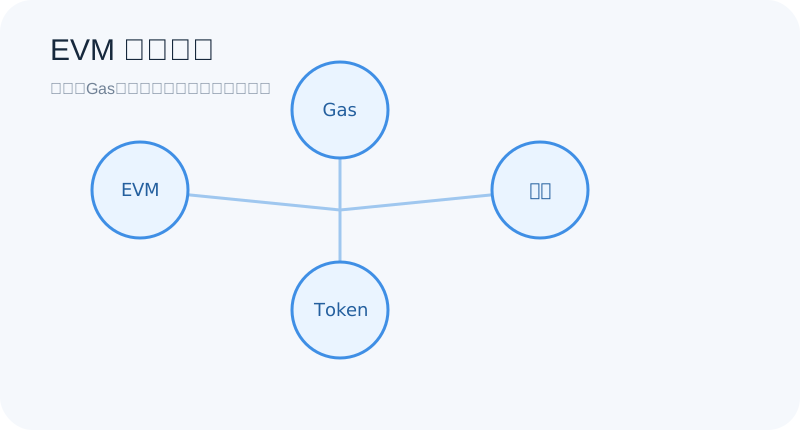
Switch the view to compare public chains, EVM networks, Layer 2, and the role of gas and confirmations.
Each network has its own transaction records and fee conditions. Network selection is part of the asset operation itself.
Public networks distribute transaction validation across network participants and expose records through explorers.
EVM-compatible environments share familiar contract concepts, but each network still has separate gas and state.
Moving between a base network and Layer 2 requires checking the route, bridge mechanics, and arrival confirmation.
Each step has a verification goal. Slowing down at these points reduces avoidable errors.
Enter through the official download page and review the device environment.
Understand whether you are creating a new account or restoring one you already control.
Store the seed phrase offline and never disclose a private key.
Confirm the network name, address format, and expected fee context.
Review the address, amount, and network before confirming.
Keep transaction hashes and remove DApp approvals you no longer need.
Connecting a wallet does not mean every later request should be accepted. Review the domain, requested account, signature purpose, and approval scope each time.
Protecting a wallet starts with control of the seed phrase and private key, but it also includes domain verification, device hygiene, transaction review, and approval management. No single feature can remove all risk. Build a process that remains useful even when a site, message, or interface tries to rush you.
Open Security CenterBefore the first transaction, understand addresses, seed phrases, private keys, networks, gas, transaction hashes, DApps, and approvals as one connected system. A wallet is easier to use when the network concepts behind the interface are not mysterious.
Start learning →How blocks, nodes, and confirmation depth affect transaction state.
Why gas, methods, and contract addresses matter.
Understand mainnet relationships and cross-layer movement.
Review connection, signature, and approval boundaries.
Build repeatable habits around secrets, devices, and transactions.
Keep key terms available as a practical reference.
Ethereum proof of stake uses validators to participate in consensus. Rewards come from protocol activity and can vary with network conditions. Withdrawals and exits follow network mechanisms rather than a guaranteed instant schedule.
Learn the fundamentals →Staking does not guarantee returns. Validator penalties, smart-contract risk, exit queues, third-party service risk, and digital-asset price movement should all be considered.
Understand validators →Notices focus on practical product, network, security, and service information that users can act on.
Guidance now links wallet actions with network and approval checks.
Confirm network and transaction status before assuming an operation is complete.
Never send a seed phrase, private key, or verification code to anyone.
Downloads are initiated only after an explicit user action.
Short answers to the concepts that most often appear before a transfer, DApp interaction, or staking decision.
No. Users keep control of seed phrases and private keys and should never send them to anyone.
At minimum, verify the destination address, network, amount, and network fee.
A network includes transactions in blocks and builds additional confirmations over time. The pace varies by network.
Connection is only the first step. Every signature and approval should be reviewed independently.
A token approval allows a contract to use tokens within a defined allowance. Check the target and scope.
No. Layer 2 uses a separate execution environment while maintaining a settlement or security relationship with a base network.
No. Rewards, exit times, network penalties, and asset prices can all change.
Review the basics, back up your wallet offline, and check network details before each operation.